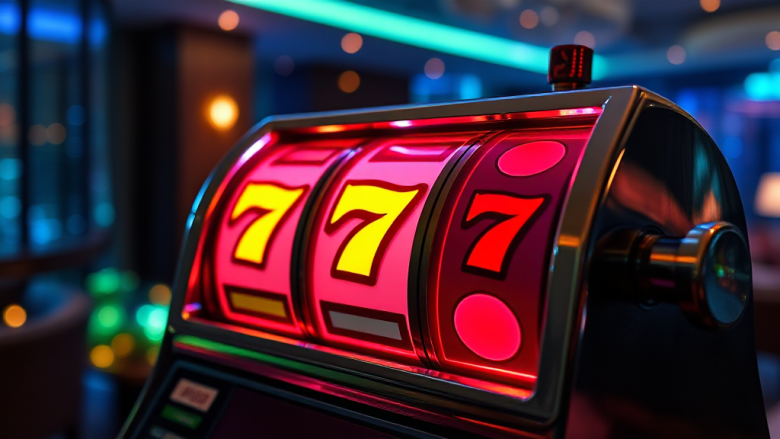
Near-Misses and Almost-Wins: The Psychology Behind Slot Gacor Play
Two symbols line up, the third stops one pixel short, and the reels flash as if something almost happened. Why does that near-miss feel closer to a win than a plain loss, even when the payout is exactly zero? The answer sits in how your brain reads patterns, not in how the machine works. Understanding that gap is the first step toward seeing situs slot gacor play — and slot play generally — for what it actually is: a designed experience built around anticipation.
This is not a strategy guide and it is not a warning label. It is a plain look at three psychological effects that make almost-wins feel like progress, with everyday examples, so you can recognize the pull when it happens.
What a Near-Miss Actually Is
A near-miss is an outcome that looks like a win but pays nothing. Three cherries on the payline is a win; two cherries plus a cherry just above the line is a near-miss. The result is identical to any other losing spin, but the display makes it feel different.
That difference is the whole point. Slot interfaces are visual by design, and the reel layout gives designers enormous control over how close a loss appears. A spin that lands scattered symbols reads as random. A spin that lands two matching symbols and a third just off-position reads as almost.
Researchers who study gambling cognition have long noted that near-misses increase arousal and motivation to continue, even though they are objectively losses. You do not need a study to feel it. You only need to notice the next time a machine makes you lean forward.
Effect One: Pattern-Seeking Turns Noise Into Signal
Human brains are pattern detectors first and statisticians second. We are built to spot sequences, and we are rewarded with a small hit of satisfaction when we find one — even when the sequence is meaningless.
A plain example
Imagine a friend flips a coin and it lands heads five times in a row. Part of you expects tails next. The coin has no memory, but your pattern detector has already built a story. Slot reels exploit the same instinct: two matching symbols create a visible pattern, and the third reel becomes the “next flip” your brain is waiting for.
This is why near-misses feel like progress. The pattern is 66 percent complete, so the mind treats the spin as a partial success rather than a total failure. The payout says otherwise, but the payout is not what you are reacting to.
The practical takeaway is simple: a near-miss is a loss with better lighting. If you catch yourself narrating a spin as “so close,” you have already handed the interface control of your attention.
Effect Two: Variable Rewards Keep Attention Hooked
Predictable rewards get boring fast. Unpredictable rewards keep animals — and people — engaged far longer. This is the core of variable reward scheduling, and it is why slot play can hold attention even when the expected value is negative.
Why the uncertainty matters more than the amount
A fixed bonus every tenth spin would quickly become background noise. A bonus that might arrive on any spin keeps the brain in a state of readiness. Near-misses amplify that state because they look like the reward system is about to fire.
Modern interfaces layer this further. Glowing symbols, sound cues, and animated reels create a rhythm of anticipation and release. None of it changes the odds, but all of it changes the experience of waiting. When a platform frames itself around situs slot gacor language, it is leaning on exactly this rhythm — the promise of frequent, uncertain, visually satisfying moments.
What awareness changes here is small but real: you can start to notice the difference between being entertained by anticipation and being steered by it. The first is a choice. The second is a reflex.
Effect Three: Illusions of Control Fill the Gaps
People consistently overestimate how much their actions influence random outcomes. Pressing a button harder, timing a tap, or choosing a “lucky” machine all feel meaningful, even when the underlying process ignores them entirely.
Where the illusion comes from
Control illusions grow in any system that gives you something to do. A stop button, a spin trigger, a choice of game — each action creates a sense that you are participating in the outcome rather than merely observing it. Near-misses make this stronger, because the outcome looks like it responded to your timing.
This is also why streaks feel so persuasive. Three near-misses in a row read as “warming up,” and a cold stretch reads as “due.” Neither interpretation is true, but both are comfortable, and comfort keeps players engaged past the point where they would otherwise stop.
The useful counter is mechanical rather than motivational. Decide your limits before you start, treat every near-miss as a loss on paper, and check whether the session still feels like entertainment or has become a task you are trying to complete.
How Interfaces Are Built Around Almost-Wins
None of these effects require deception to work. They emerge from ordinary design choices that prioritize engagement.
- Reel spacing: symbol placement can make certain losses appear closer than others.
- Animation timing: a slow final reel extends anticipation and makes the result feel earned.
- Sound design: near-miss audio often sits between the win sound and the loss sound, blurring the line.
- Visual emphasis: highlighting two matching symbols draws the eye away from the third.
You can see the same principles in any well-made game. The difference is that in a game, the near-miss is part of a story. In a slot, it is part of a payout structure — and the payout structure does not care how the spin felt.
This is the honest way to read situs slot gacor framing: as a description of an interface style, not a prediction of outcomes. A platform can promise frequent excitement and easy access; it cannot promise that the next spin is closer to a win than the last one.
What Awareness Actually Changes
Knowing about near-misses does not make them stop feeling like near-misses. The reflex is fast and the explanation is slow, so the feeling will still arrive first.
What changes is what happens next. You can name the effect while it is happening: “that was a loss that looked like progress.” You can separate the entertainment value of anticipation from any belief that the machine is warming up. And you can treat limits as decisions made in advance rather than negotiations made in the moment.
That is the practical value of understanding slot psychology. It does not turn a random game into a predictable one, and it does not make almost-wins into wins. It simply returns the interpretation to you — which is the only part of the experience that was ever yours to control.